What is the price of ISOWALL in 2026? Updated price.
Last updated: 30 Aug 2026
498 Views
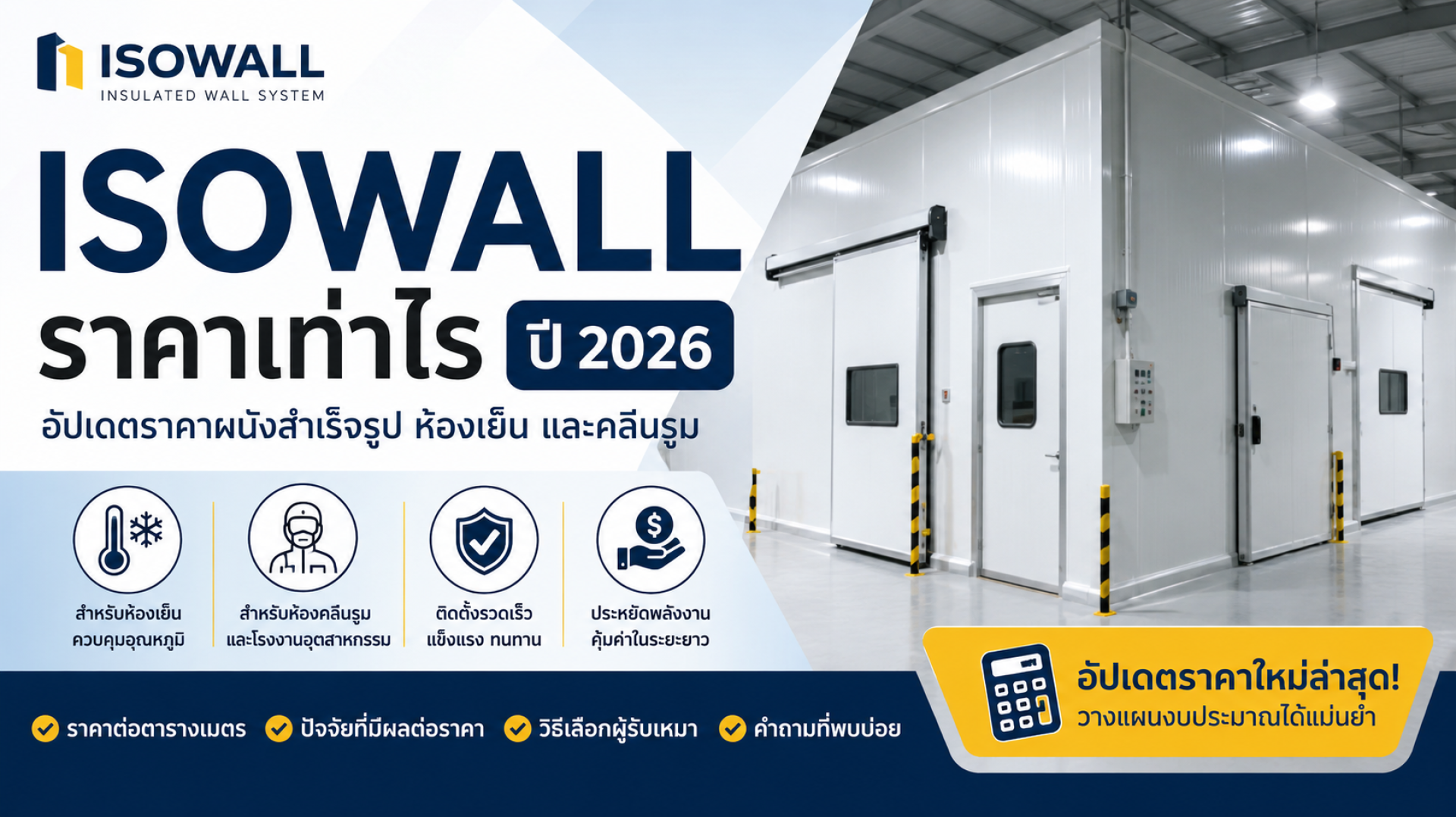
How much does ISOWALL cost in 2026? A complete guide for factories, cold storage, and cleanrooms.
In 2026, the ISOWALL prefabricated wall system remains one of the most popular building materials in the industrial sector, especially for food factories, pharmaceutical factories, cleanrooms, cold storage, and temperature-controlled warehouses, due to its outstanding thermal insulation, cleanliness, and rapid installation.
The most frequently asked question by factory owners, contractors, and business operators is, "How much does ISOWALL cost?" or "What is the price per square meter of ISOWALL in 2026?" In reality, the price of ISOWALL cannot be given as a single figure, as many factors are involved, including panel thickness, insulation type, metal sheet thickness, installation area, and site details.
What is ISOWALL?
ISOWALL is a prefabricated sandwich panel wall and ceiling system made from color-coated steel sheets sandwiched between a polyurethane (PU Foam) insulation core or other insulation materials depending on the application. It is designed to support industrial applications requiring temperature control, cleanliness, and energy efficiency.
Currently, ISOWALL is widely used in the food, beverage, pharmaceutical, cosmetic, electronics, logistics, and cold storage industries.
Why is ISOWALL so popular in industrial factories?
The main reasons for ISOWALL's popularity... Advantages include: quick installation, reduced construction time, and long-term energy cost control.
High-efficiency thermal insulation.
Reduces air conditioning workload.
Complies with GMP and HACCP standards.
Easy to clean.
Faster installation than traditional wall construction.
Can be easily dismantled and expanded in the future.
Gives factories a modern and organized look.
Factors Affecting ISOWALL Price in 2026:
1. ISOWALL Panel Thickness
Thickness is the most significant factor affecting price. Popular thicknesses include 50 mm, 75 mm, 100 mm, and 150 mm.
50 mm is suitable for offices and general areas.
75 mm is suitable for general manufacturing plants.
100 mm is suitable for cold rooms and cold storage facilities.
150 mm is suitable for freezer rooms and special temperature-controlled rooms.
The thicker the panel, the higher the material and overall costs, but the better the thermal insulation performance.
2. Metal Sheet Thickness
ISOWALL is manufactured using various metal sheets, such as 0.35 mm, 0.40 mm, 0.45 mm, and 0.50 mm. Choosing a thicker sheet increases strength, lifespan, and impact resistance.
3. Project Size
Larger projects have lower costs per square meter than smaller projects because they can better distribute transportation, tooling, and installation labor costs.
4. Complexity of Work
Numerous openings for doors, windows, service access, electrical systems, or air conditioning systems will also affect installation costs.
5. Construction Site
Provinces far from manufacturing plants or in difficult-to-access areas will have increased transportation costs.
What types of applications can ISOWALL be used for?
Cold Rooms
Cleanrooms
Food Factories
Pharmaceutical Factories
Packaging Rooms
Temperature-Controlled Warehouses
Factory Offices
Distribution Centers
Laboratories
Electronic Factories
What thickness of ISOWALL should be used for a cold room?
The thickness selection depends on the desired temperature control. Generally, cold rooms with temperatures of 0 to 10 degrees Celsius typically use 3-inch insulation, while freezer rooms may use 4-6 inches to improve cold retention efficiency.
ISOWALL vs. Brick Walls: Which is Better?
Brick walls offer strength but take longer to construct and don't provide the same level of thermal insulation as ISOWALL. ISOWALL, on the other hand, is quick to install, clean, and more energy-efficient.
ISOWALL vs. PU Sandwich Panels: What's the Difference?
Essentially, ISOWALL belongs to the sandwich panel category, like PU panels, but its assembly, interlocking system, and manufacturing standards are specifically designed for industrial applications.
Advantages of Investing in ISOWALL:
Reduced long-term electricity costs
Increased temperature control efficiency
Meets food and pharmaceutical factory standards
Reduced construction time
Enhances factory appearance and professionalism
Increases building value
How to Choose an ISOWALL Contractor:
Before choosing a contractor, consider their experience, past projects, design capabilities, and post-installation warranty.
Possible examples of completed factories
Established installation team
Design and consultation capabilities
After-sales service
Understanding GMP and HACCP standards is important.
Summary of ISOWALL price in 2026:
The price of ISOWALL in 2026 depends on the sheet thickness, material type, project size, and site details. Therefore, a site survey and assessment based on actual plans will help provide the most accurate price.
If you are planning to build a cold room, cleanroom, or industrial plant, choosing ISOWALL is a worthwhile long-term investment in terms of energy efficiency, cleanliness, and speed of construction.
Frequently Asked Questions (FAQ)
How long does ISOWALL last?
Generally, it has a lifespan of more than 15-20 years with proper maintenance.
Does ISOWALL provide sound insulation?
It can help reduce noise to some extent, and there are specific models for additional soundproofing.
Is ISOWALL suitable for food factories?
It is ideally suited as it meets hygiene standards and is easy to clean.
Is ISOWALL faster to install than brick?
Generally, it can be installed many times faster than brick construction, significantly reducing project construction time.
In 2026, the ISOWALL prefabricated wall system remains one of the most popular building materials in the industrial sector, especially for food factories, pharmaceutical factories, cleanrooms, cold storage, and temperature-controlled warehouses, due to its outstanding thermal insulation, cleanliness, and rapid installation.
The most frequently asked question by factory owners, contractors, and business operators is, "How much does ISOWALL cost?" or "What is the price per square meter of ISOWALL in 2026?" In reality, the price of ISOWALL cannot be given as a single figure, as many factors are involved, including panel thickness, insulation type, metal sheet thickness, installation area, and site details.
What is ISOWALL?
ISOWALL is a prefabricated sandwich panel wall and ceiling system made from color-coated steel sheets sandwiched between a polyurethane (PU Foam) insulation core or other insulation materials depending on the application. It is designed to support industrial applications requiring temperature control, cleanliness, and energy efficiency.
Currently, ISOWALL is widely used in the food, beverage, pharmaceutical, cosmetic, electronics, logistics, and cold storage industries.
Why is ISOWALL so popular in industrial factories?
The main reasons for ISOWALL's popularity... Advantages include: quick installation, reduced construction time, and long-term energy cost control.
High-efficiency thermal insulation.
Reduces air conditioning workload.
Complies with GMP and HACCP standards.
Easy to clean.
Faster installation than traditional wall construction.
Can be easily dismantled and expanded in the future.
Gives factories a modern and organized look.
Factors Affecting ISOWALL Price in 2026:
1. ISOWALL Panel Thickness
Thickness is the most significant factor affecting price. Popular thicknesses include 50 mm, 75 mm, 100 mm, and 150 mm.
50 mm is suitable for offices and general areas.
75 mm is suitable for general manufacturing plants.
100 mm is suitable for cold rooms and cold storage facilities.
150 mm is suitable for freezer rooms and special temperature-controlled rooms.
The thicker the panel, the higher the material and overall costs, but the better the thermal insulation performance.
2. Metal Sheet Thickness
ISOWALL is manufactured using various metal sheets, such as 0.35 mm, 0.40 mm, 0.45 mm, and 0.50 mm. Choosing a thicker sheet increases strength, lifespan, and impact resistance.
3. Project Size
Larger projects have lower costs per square meter than smaller projects because they can better distribute transportation, tooling, and installation labor costs.
4. Complexity of Work
Numerous openings for doors, windows, service access, electrical systems, or air conditioning systems will also affect installation costs.
5. Construction Site
Provinces far from manufacturing plants or in difficult-to-access areas will have increased transportation costs.
What types of applications can ISOWALL be used for?
Cold Rooms
Cleanrooms
Food Factories
Pharmaceutical Factories
Packaging Rooms
Temperature-Controlled Warehouses
Factory Offices
Distribution Centers
Laboratories
Electronic Factories
What thickness of ISOWALL should be used for a cold room?
The thickness selection depends on the desired temperature control. Generally, cold rooms with temperatures of 0 to 10 degrees Celsius typically use 3-inch insulation, while freezer rooms may use 4-6 inches to improve cold retention efficiency.
ISOWALL vs. Brick Walls: Which is Better?
Brick walls offer strength but take longer to construct and don't provide the same level of thermal insulation as ISOWALL. ISOWALL, on the other hand, is quick to install, clean, and more energy-efficient.
ISOWALL vs. PU Sandwich Panels: What's the Difference?
Essentially, ISOWALL belongs to the sandwich panel category, like PU panels, but its assembly, interlocking system, and manufacturing standards are specifically designed for industrial applications.
Advantages of Investing in ISOWALL:
Reduced long-term electricity costs
Increased temperature control efficiency
Meets food and pharmaceutical factory standards
Reduced construction time
Enhances factory appearance and professionalism
Increases building value
How to Choose an ISOWALL Contractor:
Before choosing a contractor, consider their experience, past projects, design capabilities, and post-installation warranty.
Possible examples of completed factories
Established installation team
Design and consultation capabilities
After-sales service
Understanding GMP and HACCP standards is important.
Summary of ISOWALL price in 2026:
The price of ISOWALL in 2026 depends on the sheet thickness, material type, project size, and site details. Therefore, a site survey and assessment based on actual plans will help provide the most accurate price.
If you are planning to build a cold room, cleanroom, or industrial plant, choosing ISOWALL is a worthwhile long-term investment in terms of energy efficiency, cleanliness, and speed of construction.
Frequently Asked Questions (FAQ)
How long does ISOWALL last?
Generally, it has a lifespan of more than 15-20 years with proper maintenance.
Does ISOWALL provide sound insulation?
It can help reduce noise to some extent, and there are specific models for additional soundproofing.
Is ISOWALL suitable for food factories?
It is ideally suited as it meets hygiene standards and is easy to clean.
Is ISOWALL faster to install than brick?
Generally, it can be installed many times faster than brick construction, significantly reducing project construction time.